Why Leads Go Cold and How AI Fixes It
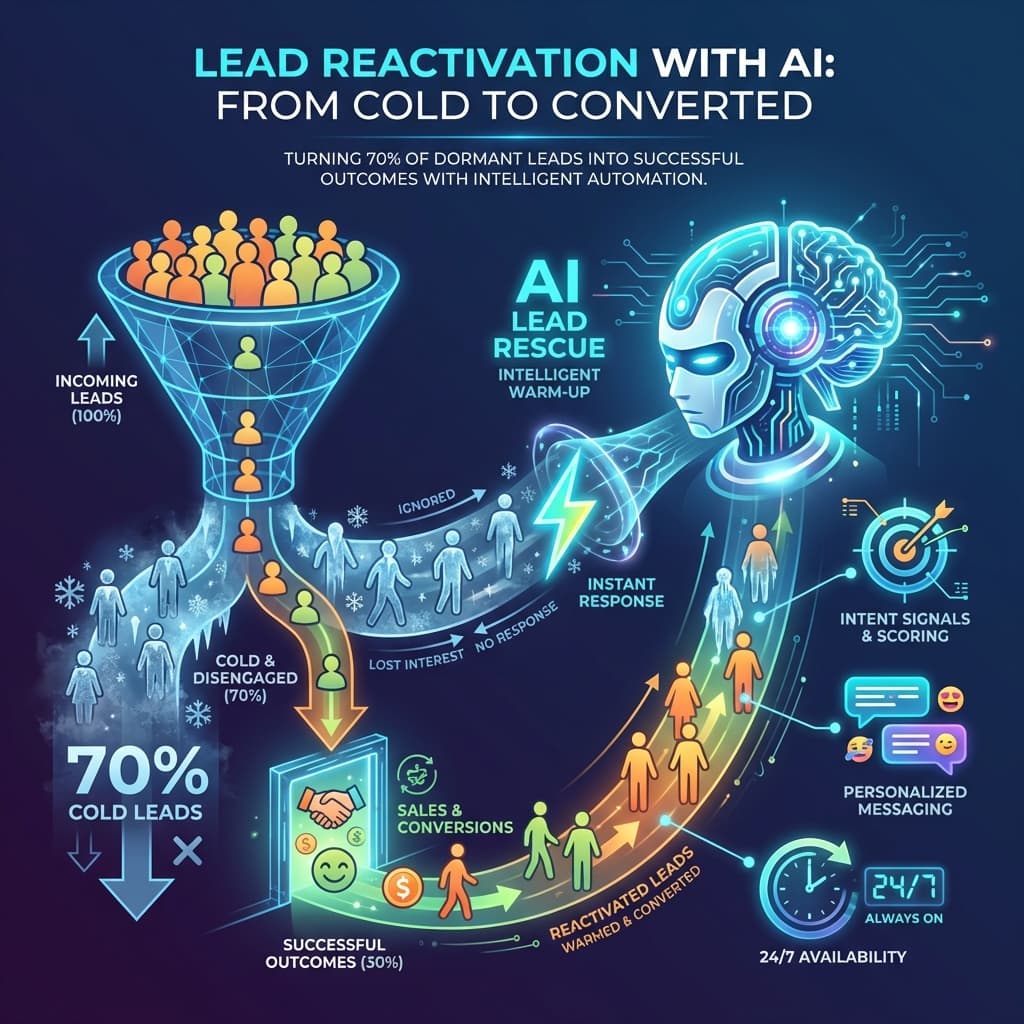
Leads do not go cold because buyers lose interest. They go cold because teams follow up on the wrong signal. AI lead follow-up changes that by tracking what buyers do between conversations, not just what reps log after them.
Leela runs inside sales for a residential developer in Ludhiana. She manages a team of nine reps handling roughly 400 inbound leads a month across three projects. Last quarter she sat down with her pipeline data and traced every deal that died after the first site visit. Of twenty-two deals, eighteen had received at least three follow-up messages. The CRM looked healthy. The conversion rate did not.
One case stood out. A lead had visited the site, asked specific questions about possession timelines, and then gone quiet for eight days. Her rep called twice, got voicemail, and marked the lead as cold. Two weeks later, Leela saw the same buyer had booked with a competing project down the road. The competitor had called on day six, apparently with a context-specific message about possession dates. Leela's team had called on day three and day seven with no context at all. The buyer was never cold. The team was calling blind.
Why does the standard follow-up playbook fail?
Most sales teams run follow-up on a fixed cadence: call on day one, message on day three, follow up on day seven. The logic is understandable. Without a signal from the buyer, time is the only scheduling variable available. The problem is that buyers are not on your cadence. They are in a deliberation cycle that has its own rhythm, driven by family conversations, competing options, and financial readiness. A buyer who was most engaged on day five does not benefit from a call on day seven. By then the moment has passed or the competitor has already moved in.
The second failure is context. Even when reps call at roughly the right time, they open with "just following up" because they do not know what the buyer has been looking at since the last conversation. That phrase signals something damaging: the rep has no idea where the buyer is in their thinking. A buyer who has spent the last two days re-reading possession clauses and sharing the floor plan with a parent is not waiting to hear "I wanted to touch base." They are waiting for someone to answer a specific question they have not yet asked out loud.
What is the Quiet Evaluation Phase?
The Quiet Evaluation Phase is the period between two sales touches when a buyer is actively considering but not actively communicating. It is the most consequential stretch of any deal. Buyers revisit pricing pages, re-read legal disclosures, share brochures, calculate EMIs, and compare floor plans. All of this happens entirely outside the rep's view. In a team without AI intent tracking, the Quiet Evaluation Phase is invisible. Every lead in this phase looks identical to a genuinely disinterested lead. Both appear as silence in the CRM. The difference is that one group is close to deciding and the other has already moved on.
The Quiet Evaluation Phase is not a buyer behavior problem and it is not something AI can shorten. Buyers need time to deliberate and that is appropriate. What AI can do is make the phase visible. When a buyer is given a personalized microsite, a tracked brochure, or an interactive cost sheet, every interaction they have with that material creates a behavioral record. Return visits, time spent per section, document downloads, and link shares all become data. When those signals cluster into a recognizable pattern of high intent, the system surfaces the lead to a rep with the full activity timeline attached.
Which signals actually predict readiness to decide?
- Multiple returns to the payment plan or cost sheet within a 24-hour period.
- Opening possession, legal, or handover documents after skipping them on earlier visits.
- Sharing the microsite or brochure link with a second contact, typically a spouse or parent.
- Returning to project content within 48 hours of a site visit.
- Moving from overview or gallery content to configuration, unit selection, or pricing pages.
- Clicking a booking or enquiry button without completing the action.
- Extended session time on a single section, particularly pricing or floor plan views.
No single signal is definitive. A buyer who opens the payment plan once and never returns is not the same as a buyer who opens it four times over two days and then shares it. AI intent scoring weighs signal clusters, not individual events. The output is not a binary hot-or-cold label but a ranked prioritization that tells a rep which leads deserve attention today and why.
Why cadence-first follow-up is actually an anti-pattern
Here is the contrarian claim worth making directly: structured follow-up cadences, the kind that get celebrated in sales playbooks, are an anti-pattern when applied uniformly to every lead. Cadence discipline is a solution to a different problem, specifically the problem of reps who forget to follow up at all. Applied without signal awareness, cadences produce a predictable failure mode: high-intent leads receive generic calls at the wrong moment, and reps waste time on genuinely cold leads that the cadence insists they chase for another two weeks.
The fix is not to abandon structure entirely. It is to let buyer signals govern timing while using structure only as a backstop for leads with no detectable activity. In practice this means two tiers: a signal-driven queue for leads showing active intent, handled with full context, and a slower cadence queue for genuinely quiet leads that still need periodic contact. Teams that separate these two pools stop wasting rep attention on the quiet queue while dramatically improving conversion on the active one.
How does AI-powered follow-up change the rep's day?
Before AI intent tracking, a rep arrives in the morning and works through a list sorted by recency or call count. There is no way to know which leads deserve urgency. With intent-based prioritization, the rep opens a queue that is ranked by buyer activity from the past 24 hours. The top entries are leads who visited the microsite last night, re-read the pricing section three times, or sent the floor plan to a family contact. The rep enters each call knowing what the buyer just looked at, and can open with something specific rather than a generic check-in.
The effect is not just conversion rate. Rep morale improves measurably when calls have context. Cold outreach is demoralizing because it is mostly rejection. Warm outreach to buyers who have been quietly active is a different experience. The rep feels useful rather than intrusive. This matters in markets like Indian real estate and edtech, where rep turnover is a persistent cost problem. AI follow-up is partly a retention tool.
The Quiet Evaluation Phase in one sentence
Your CRM records what your team did. A buyer intent layer records what the buyer did. The second record is the one that tells you when to call.
What changes for Leela's team after a quarter?
Teams that shift from cadence-first to signal-first follow-up typically see three structural changes within ninety days. The first is concentration: rep attention consolidates around genuinely active leads rather than spreading across the full pipeline. The second is conversation quality: reps enter calls with context, so they spend less time re-establishing where the conversation left off and more time advancing it. The third change is the one that surprises most managers. Many leads previously marked cold were in their Quiet Evaluation Phase the entire time. When those leads show up with a signal and receive a specific, timely call, a meaningful fraction convert without any special offer or urgency tactic.
The pipeline itself does not grow. The yield from the same pipeline improves. That is the actual value proposition of AI lead follow-up, and it is worth stating precisely because many teams expect AI to generate more leads. It does not. It recovers conversion that was always there but invisible.
What about sectors beyond real estate?
The Quiet Evaluation Phase exists in any high-consideration sale. In edtech, a parent spends several days comparing fee structures, reading curriculum details, and discussing options with a spouse before responding to a counselor. In lending and personal finance, a borrower revisits EMI calculators and compares terms across multiple providers over a week or two. In healthcare, a patient researching an elective procedure reads reviews and treatment protocols privately before calling the clinic. In each case, the team sees silence. The buyer is actively evaluating.
The signal taxonomy differs slightly by vertical. Real estate signals cluster around pricing, possession, and configuration. Edtech signals concentrate on batch schedules, outcomes data, and fee breakdowns. Lending signals appear in calculator usage and comparison behavior. Healthcare signals surface through procedure detail views and testimonial reads. AI intent systems that are calibrated per vertical will surface more meaningful signals than generic engagement scoring applied uniformly across all content types.
How does this sit alongside a CRM?
A common implementation concern is whether buyer intent tracking disrupts existing CRM workflows. It does not, and the framing that resolves the concern is this: the CRM records what the team did, and the intent layer records what the buyer did. Both records are necessary. Neither is redundant. The intent layer feeds activity context into the CRM so that when a rep opens a lead record, they see not just their own call history but the buyer's behavioral history since the last conversation. The rep's actions still update the CRM as normal. The difference is that the CRM now contains two timelines instead of one.
Integration with most CRMs used by Indian SMBs and enterprise sales teams is handled through webhook or API connections. Leads stay in the same system. Priorities are surfaced as a ranked queue or a direct notification to the rep. The workflow change is minimal. The information quality change is substantial.
Leela, a quarter later
After connecting Brixi's intent tracking to her team's microsites and tracked documents, the first thing Leela noticed was not a new conversion. It was a lead her rep had already marked cold, quietly sitting at the top of the signal queue because it had revisited the pricing section four times over the previous weekend. Her rep called with full context. The lead converted within three days.
The deeper change was cognitive. Her reps stopped treating the CRM's lead list as the source of truth about who to call. Buyer activity became the source of truth, and the CRM became the record of the team's response to it. That inversion sounds small, but it restructures how a sales team thinks about its pipeline. Reps stop asking "which lead should I call today?" and start asking "which lead is showing me something right now?" That question has a better answer.
Is this the right moment to make the shift?
The marginal cost of adding intent tracking to a sales workflow is lower than it has ever been. Personalized microsites, tracked documents, and behavioral analytics are no longer infrastructure projects. They are configuration tasks that deploy in days, not quarters. The cost of not making the shift is harder to measure because it shows up as deals that simply did not happen. There is no alert in the CRM when a buyer you lost decided during their Quiet Evaluation Phase. The deal just disappears from the pipeline and your rep moves on. AI lead follow-up makes that loss visible before it happens.
How many of your cold leads are still inside their Quiet Evaluation Phase?
Brixi pairs buyer intent tracking with AI-powered lead follow-up so your team reaches active buyers at the right moment with the right context. Real estate, edtech, lending, and healthcare teams use it today.
Explore the Brixi intent engineFrequently Asked Questions
Leads go cold after a site visit or demo most often because the follow-up that follows is timed to the team's cadence rather than the buyer's activity. The buyer enters a Quiet Evaluation Phase, revisiting pricing and comparing options privately, while the team calls on day three and day seven with no context about what the buyer has been looking at. The call feels irrelevant, the buyer does not respond, and the rep marks the lead cold. In many of these cases the buyer was never disinterested. The team simply had no visibility into the Quiet Evaluation Phase.
AI intent tracking instruments the buyer's side of the interaction through a personalized microsite or tracked document. Every section the buyer opens, every return to the pricing tab, and every link share is recorded as a behavioral event. When those events cluster into a high-intent pattern, such as multiple visits to payment plan pages within 24 hours combined with a document share, the system surfaces the lead to a rep with the full activity timeline. The call is triggered by buyer behavior, not by a fixed schedule.
No. AI handles signal detection, lead prioritization, and the routing of high-intent leads to the right rep at the right moment. The actual call, the relationship-building, and the negotiation remain entirely human. The goal is to ensure that human reps spend their time on conversations that have a real chance of converting rather than on uniformly distributed outreach across leads in very different states of readiness.
Yes. The intent tracking layer sits alongside your CRM rather than replacing it. Buyer activity signals feed into the CRM as context, so reps see what the buyer did between conversations before they call. The rep's call outcomes continue to update the CRM as normal. The workflow change is minimal. The quality of information going into each call improves substantially. Integration with most CRMs used by Indian sales teams is handled through standard API or webhook connections and typically takes days rather than weeks to configure.