Omnichannel AI: Why Real Estate Teams Close More Deals
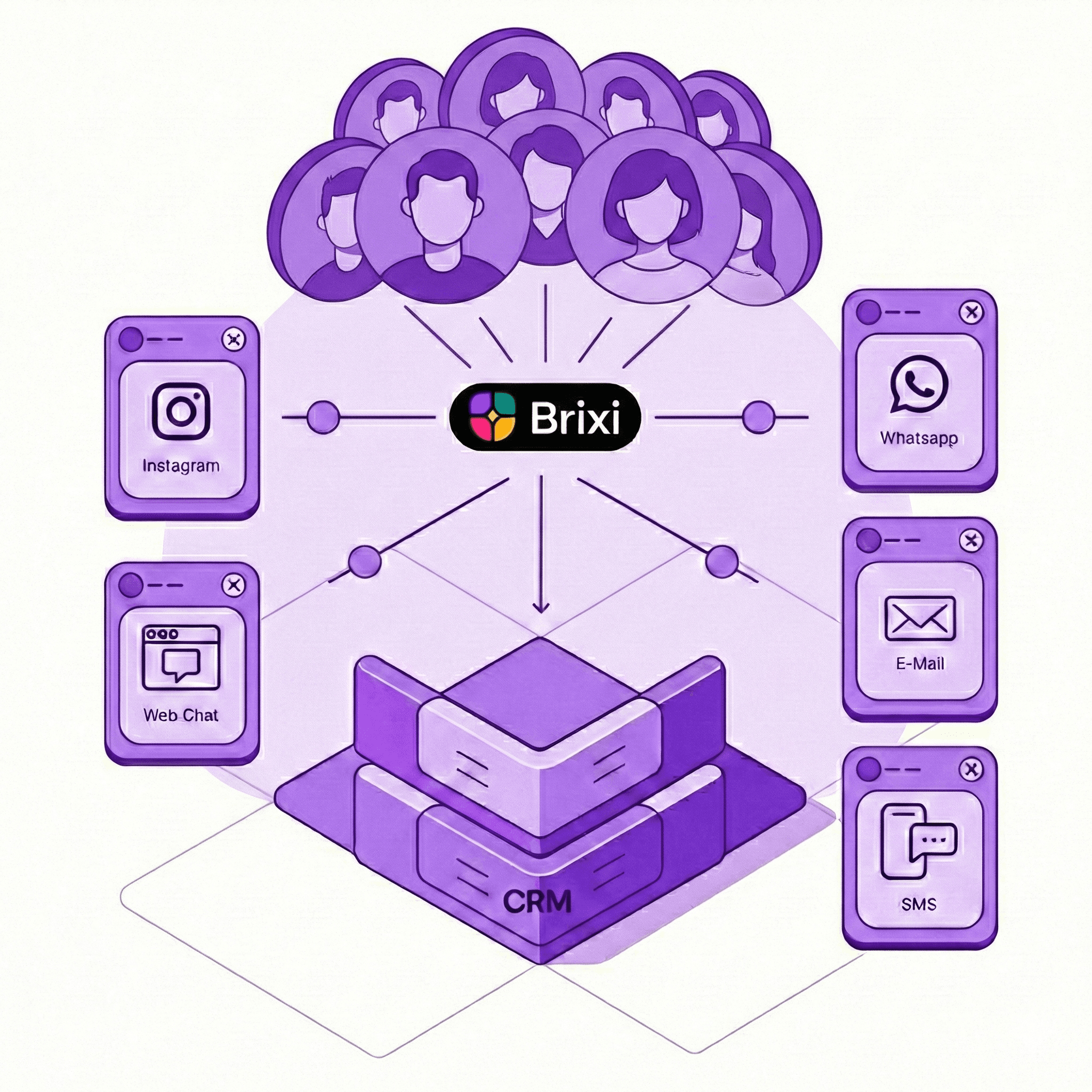
Most real estate sales desks reach buyers on WhatsApp, email, ads, and microsites. The problem is that no single view shows what a buyer does across all those channels before the rep calls. Omnichannel AI solves that by turning scattered touchpoints into a unified intent timeline.
Jeevan runs a twelve-person sales desk for a residential developer in Ludhiana. In October last year, one of his senior reps spent six weeks nurturing a buyer who had come in through a Facebook ad for a 3BHK project. The buyer chatted actively on WhatsApp for the first ten days, then stopped responding. The rep called twice a week on a fixed schedule, got no answer, and eventually moved the lead to a cold bucket. Three weeks later, the buyer signed with a competing project. When Jeevan pulled the data afterward, the story was right there: the buyer had revisited the payment-plan page four times in the final week, re-opened the project brochure twice, and clicked a retargeting ad the morning before signing with the competitor. The rep had sent a generic "just checking in" WhatsApp that same day. Not one of those behavioral signals had surfaced to anyone on the desk.
That story is not unusual. It is, in fact, the default operating mode for most mid-size real estate teams in India today. Buyers move across channels constantly: they click an ad, browse a microsite on their phone, open a brochure on a laptop, share a floor-plan image in a family WhatsApp group, and come back three weeks later to re-read the possession timeline. The sales team sees none of that movement unless someone manually checks each tool, cross-references the contact record, and builds a timeline by hand. Nobody does that for every lead in a pipeline of three hundred.
What is the Fractured Signal Problem in real estate sales?
The Fractured Signal Problem is what happens when buyer behavior data lives in four or five separate tools and no one has a complete view before making a follow-up decision. A WhatsApp CRM logs message threads. An email platform logs open rates. Google Analytics logs microsite sessions. A Facebook Ads dashboard logs retargeting clicks. Each of these tools is doing its job. The problem is that the intent signal is not in any single tool. It is in the pattern across all of them. A buyer who goes quiet on WhatsApp but revisits the pricing page twice and clicks a retargeting ad is not a cold lead. They are a buyer in an active internal decision cycle. A sales team that only looks at WhatsApp activity calls that person "unresponsive" and schedules another generic touchpoint. A team that sees the full behavioral picture calls that person with a specific, well-timed message about the floor plan they kept coming back to.
The Fractured Signal Problem compounds over time. As pipeline grows, the volume of cross-channel activity grows faster than any rep can manually track. Teams respond by doubling cadence: more calls, more WhatsApp messages, more email blasts. But cadence without context does not close deals. It accelerates unsubscribes and blocks. The buyers who are genuinely close to a decision get the same generic outreach as the ones who clicked once and never came back. The result is a conversion rate that looks stable on a per-lead basis but is quietly losing deals to competitors who can tell the difference.
How does omnichannel AI actually work for a real estate desk?
Omnichannel AI for real estate connects the data layer across every channel a buyer touches: WhatsApp conversations, email open and click events, microsite and landing page sessions, project brochure views, ad retargeting clicks, and call transcripts. It builds a persistent, chronological timeline for each contact that updates in near real time. The rep does not need to pull reports or switch dashboards. The system surfaces a single consolidated view: "This lead revisited the floor-plan page twice in the last 48 hours. Last WhatsApp contact was four days ago. They clicked a retargeting ad this morning. No reply to last three messages." That is a warm lead with high purchase intent, not a cold one. The rep picks up the phone with a specific reason to call. Or the AI voice agent makes a contextual outreach call automatically, referencing the specific content the buyer has been revisiting.
Which buyer signals matter most across channels?
Not every cross-channel event carries equal weight. Teams that try to act on every signal end up with reps chasing every ad click and burning credibility on low-intent leads. The Fractured Signal Problem has a counterpart anti-pattern: Signal Overload, where the system surfaces so many events that reps ignore the feed entirely. Good omnichannel AI applies a scoring layer that distinguishes high-intent behavioral clusters from routine browsing. The following signals, when they cluster within a short window, reliably indicate a buyer in active evaluation.
- Pricing or payment-plan page revisited more than once within 48 to 72 hours.
- Possession timeline or legal documentation section viewed after a period of silence.
- Project brochure forwarded to a second contact, indicating family or partner review.
- Retargeting ad clicked more than two weeks after the last direct outreach.
- Buyer-initiated WhatsApp session after a multi-week period of no response.
- Site-visit booking page opened but not completed, within 24 hours of any of the above.
- Floor-plan or unit-configuration page viewed on a weekend evening.
Each of these signals is available in at least one existing tool on a typical real estate team. The problem is isolation: they sit in separate dashboards, visible only to whoever happened to log in and run the right report. Omnichannel AI pulls them together and presents the cluster as an alert attached to the contact record. The rep does not need to know how the signal scoring works. They need to see: "Three intent signals in the last 48 hours. Suggested action: call now."
Why is the conventional "follow-up cadence" approach breaking down?
The standard answer to low follow-up conversion in Indian real estate has been cadence automation: build a sequence of WhatsApp messages, email nudges, and call attempts triggered by time intervals after initial inquiry. Day 1: welcome message. Day 3: brochure follow-up. Day 7: call attempt. Day 14: re-engagement offer. These sequences are better than nothing. But they are built on the assumption that time since inquiry is the most important variable for follow-up timing. It is not. Buyer behavior since the last touchpoint is far more predictive. A buyer who went cold at Day 7 but revisited the project microsite at Day 21 is not in the same position as a buyer who has not touched any project asset since Day 3. A time-based cadence treats them identically. An omnichannel AI platform treats them completely differently.
The contrarian claim here is worth stating directly: most real estate teams are already over-communicating with buyers who have low intent, and under-communicating with buyers who have high intent. Cadence automation sends more messages to the buyers who clicked once and moved on, because they have not unsubscribed yet. It sends the same timed messages to genuinely hot leads, because the system does not know the lead is hot. The result is that reps spend disproportionate time on low-probability conversations while high-intent buyers receive generic outreach at the wrong time and convert to competitors.
Note Channel activity is not buyer intent
Sending ten messages across five channels is channel activity. Knowing that a buyer opened the payment plan on a Sunday night is buyer intent. Omnichannel AI converts scattered activity data into actionable intent signals.
How does omnichannel AI integrate with WhatsApp and voice AI in practice?
The most effective real estate implementations layer omnichannel AI with two execution channels: WhatsApp automation and AI voice agents. When the intent scoring system detects a high-signal cluster, it can trigger one of three actions automatically: a personalized WhatsApp message referencing the specific content the buyer has been engaging with; an AI voice outreach call with a contextual opening built from the behavioral timeline; or an alert pushed to the assigned rep with a recommended call script. Which action fires depends on the time of day, the lead stage, and the signal strength. A cluster of medium-strength signals at 10am on a weekday might trigger a WhatsApp message. The same signals at 7pm, combined with a return session on the booking page, might trigger an AI voice call immediately and alert the rep for a follow-up in the morning.
The key operational shift is that the AI is not replacing the rep. It is ensuring that the rep never has to choose between 300 contacts with equal apparent urgency. The omnichannel timeline surfaces the three to five leads that need attention today, ordered by behavioral signal strength. The rep starts their morning knowing exactly which conversations to prioritize, and each of those conversations has a specific reason behind it grounded in what the buyer actually did. This changes the quality of the interaction. A rep who calls because "this lead went back to the payment plan page twice yesterday" has a completely different conversation than one who calls because "it has been seven days since last contact."
What changes after a quarter of running omnichannel AI?
Teams that have run omnichannel AI for 90 days consistently report three operational changes. First, the Fractured Signal Problem shrinks noticeably. Reps stop being surprised by deals that "came out of nowhere," because the behavioral timeline made the intent visible days or weeks before the buyer made direct contact again. The deals that used to look like luck start to look like process. Second, pipeline reviews become qualitatively different. Managers stop asking "how many calls did we make this week?" and start asking "which accounts showed behavioral intent this week and what did we do with it?" The conversation shifts from activity metrics to readiness metrics, which changes how manager attention is allocated across the desk. Senior reps get more autonomy. New reps get clearer guidance on who to call and why. Third, follow-up quality rises without adding headcount. Because each outreach is anchored in real buyer behavior, fewer messages achieve the same outcome. Reps can carry larger pipelines without losing track of warm signals, because the system surfaces those signals before the rep would ever think to check.
There is also a fourth change that takes longer to show up but matters most over a full sales cycle: fewer deals go cold without explanation. The Fractured Signal Problem creates a specific type of loss that never appears in a CRM report: the buyer who was warm, went quiet, re-engaged silently on a microsite, and then signed with a competitor because no one noticed the re-engagement. Omnichannel AI eliminates most of those losses by making silent re-engagement visible in near real time. The deals are not won back after the fact. They are caught before they leave.
What does this look like for Jeevan twelve weeks later?
Jeevan is still running the same twelve-person desk in Ludhiana. The same project. The same buyer profiles. But his team is now operating off a unified behavioral timeline for every contact in the pipeline. When a lead goes quiet on WhatsApp, the system does not stop watching. It tracks microsite sessions, email opens, and retargeting behavior in the background. When that buyer came back to re-read the possession schedule last week, an alert fired to the assigned rep with a suggested opening: "I noticed you were looking at the possession timeline. A few things have been confirmed that I think you would want to know about." The buyer replied within an hour. That conversation is now in final negotiation.
The Fractured Signal Problem is not a technology problem at its core. It is a visibility problem. Real estate buyers do not stop evaluating between conversations. They visit microsites, re-read documents, share floor plans with family, and click retargeting ads at ten at night. A sales team that can only see what happens inside its own CRM is watching a fraction of that decision process. Omnichannel AI fills in the rest. Teams that solve the Fractured Signal Problem do not need to work harder, add headcount, or send more messages. They need to see what buyers are doing between conversations, and they need that visibility in time to act on it.
Are you solving the Fractured Signal Problem on your desk?
Brixi connects your WhatsApp, email, ads, and microsites into a single buyer-intent timeline. Your reps see who is active, what they are looking at, and the right moment to call.
Explore the Brixi intent engineFrequently Asked Questions
A standard CRM records what your team does: calls logged, messages sent, notes added. Omnichannel AI records what the buyer does across all touchpoints: microsite pages revisited, brochures re-opened, retargeting ads clicked, WhatsApp sessions initiated by the buyer. Buyer behavior between conversations is a stronger predictor of purchase timing than rep activity, which is why the two systems produce very different follow-up decisions from the same lead.
Start with the four channels where Indian residential buyers are most active between formal conversations: WhatsApp, email, the project microsite or landing page, and retargeting ads. Once those four feed into a unified timeline, you cover the majority of the Fractured Signal Problem. Voice call transcripts and booking page behavior are valuable additions in a second phase once the core integration is stable.
Signal strength and cluster size drive the decision. A buyer who revisits the pricing page twice within 48 hours and clicks a retargeting ad the same morning is showing a strong cluster: that warrants a direct call. A single new ad click or brochure open warrants a personalized WhatsApp message referencing the specific content. A single email open feeds into automated nurture rather than direct rep outreach. Omnichannel AI applies these routing rules automatically so reps do not have to make the judgment call manually for every contact.
Silent leads are not necessarily cold. Many buyers go quiet during internal deliberations, home-loan approvals, or family decision cycles. Omnichannel AI keeps monitoring their microsite behavior, email engagement, and retargeting activity during that silence. When re-engagement signals appear, the system surfaces the lead immediately with full behavioral context so the rep follows up at exactly the right moment rather than calling on an arbitrary fixed schedule.