Behavior-Driven Sales Conversations That Close Faster
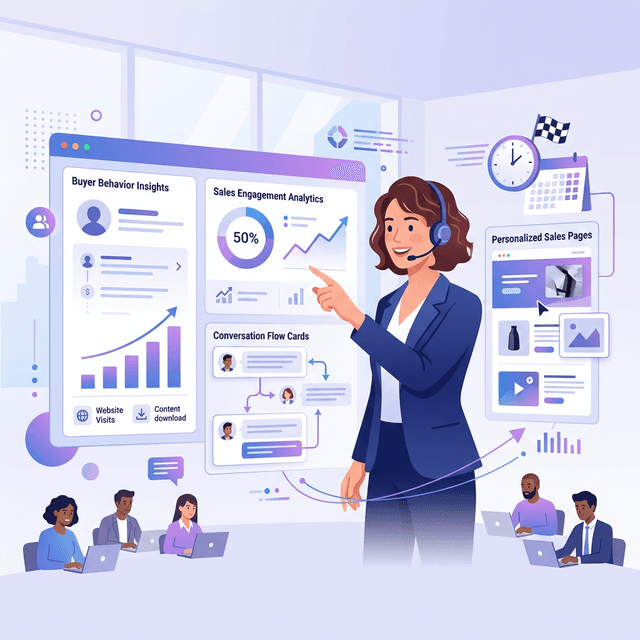
Most reps prepare for calls using stage and profile data. The ones who close faster prepare using buyer behavior: what the lead actually read, revisited, and shared. Here is how to build that habit.
Damini runs a team of six sales executives at a Lucknow-based edtech company selling upskilling programs to working professionals. She noticed a pattern in her team's lost deals: reps were calling leads on schedule, covering the curriculum, answering questions, and logging the call as "follow-up pending." Weeks later, those same leads would show up as churned, having enrolled elsewhere. The reps had no idea anything had changed. Neither did the CRM. The leads had stopped replying, and the team had stopped reading them.
The real problem was not the script and it was not the cadence. It was that every call was prepared the same way regardless of what the buyer had actually done since the last interaction. A lead who had visited the placement-outcome page four times in two days got the same opening as a lead who had not opened a single link. The script treated both as equally ready. They were not.
What is the Behavior Lag and why does it cost deals?
The Behavior Lag is the space between what a buyer reveals in a conversation and what their behavior already shows. A lead who visits the EMI calculator twice, opens the fee structure page, and then goes quiet for three days is not disengaged. They are in private evaluation mode, running the numbers before they commit to anything on a call. A rep who calls without seeing this behavior will open with a generic check-in. A rep who sees it will open with fee clarity. The second call lands on a buyer who is already mentally qualifying the purchase. The first call interrupts one.
The Behavior Lag is wider in categories where the purchase is emotional, multi-stakeholder, or budget-sensitive: real estate, edtech, lending, healthcare, and most B2B SaaS deals in India. In these categories, buyers do not announce when they shift from browsing to evaluating. They just start consuming different content. Lead behavior tracking is the practice of reading that shift.
Why does calling by schedule instead of by signal fail?
The standard follow-up model is built on time intervals: call on day 1, WhatsApp on day 3, email on day 7, mark cold on day 14. This model has one advantage: it is easy to execute at volume. It has one serious flaw: it treats every lead at the same stage of readiness at each interval, regardless of what they have actually done.
The anti-pattern this creates is called the Uniform Cadence Trap. A rep running a uniform cadence calls a lead on day 7 because it is day 7, even if that lead revisited the pricing page twice the night before. Another lead who has not touched anything since day 1 gets the same priority call. The rep has no way to tell the difference because no one is watching content behavior. Sales engagement analytics, when properly set up, breaks this trap by surfacing which leads changed behavior recently and in what direction.
A second anti-pattern is the Profile Bias: qualifying leads based on who they appear to be rather than what they are doing. A buyer with a high-income job title but zero engagement on the course content is less ready than a mid-level professional who has opened the curriculum PDF three times and watched the demo. Profile predicts relevance. Behavior predicts readiness. Most sales teams optimize for the first and miss the second.
What buyer intent signals actually predict a serious conversation?
Not all engagement is equal. A lead who opens a welcome email is showing curiosity. A lead who visits the fee structure, then leaves, then comes back the next day and visits it again is showing financial evaluation. The difference matters enormously for how a rep should enter the call.
- Repeat visits to fee, pricing, or commercial terms pages within 48 hours. This is the clearest signal of active financial consideration.
- Progression from overview content to implementation, timeline, or outcome details. Buyers who move from "what is this" to "how does it work in practice" have crossed from curiosity to evaluation.
- Return within 24 hours after a call or content share. The buyer is running the information past someone or reviewing it against a decision checklist.
- Engagement with objection-relevant sections such as placement rates, loan options, or comparison pages. This tells you exactly what the buyer is uncertain about.
- Stakeholder sharing: the same microsite or document opened from a second device or a different city. A second decision-maker has entered the picture.
- Visit or enrollment intent pages accessed but not completed. Abandoned booking attempts signal high intent blocked by friction, not low interest.
The contrarian point worth stating directly: high message volume from a lead is not a reliable readiness signal. In many categories, the most engaged chatters are the least likely to convert. They are gathering information for a decision they are not ready to make. The leads closest to buying often go quiet, because they are using their conversational energy internally, discussing with a spouse, parent, or manager. Lead qualification signals built on reply rates miss this segment entirely.
How do personalized microsites improve sales conversation intelligence?
When a rep shares a fee structure over WhatsApp, a brochure over email, and a demo link over a third channel, the behavior is fragmented across three surfaces. No single tool captures what the buyer actually read and for how long. Personalized microsites consolidate this into one trackable environment.
A microsite built for a specific lead contains everything relevant to their evaluation: course curriculum, placement outcomes, fee schedule, EMI calculator, and the next step. Because all interaction happens on one surface, the rep gets clean section-level data. Did the buyer read the placement stats? Did they spend more time on the fee section than the curriculum? Did they share the link, and if so, who opened it from where? This data converts the next call from a generic catch-up into a targeted conversation. The rep enters knowing where the buyer's attention concentrated, and addresses that first.
Insight Signal vs. stage
A lead's CRM stage tells you where they were. Their recent behavior tells you where they are right now. The second input is what actually shapes a useful sales conversation.
How should a rep actually structure a behavior-driven sales call?
The structure changes at three points: the opening, the qualification questions, and the close. In a behavior-driven conversation, the opening references the buyer's known focus area without disclosing the tracking directly. Instead of "just checking in," the rep says "I wanted to walk you through the financing options since that tends to be where most professionals in your situation want clarity." This works when the rep knows the buyer visited the EMI section. It lands as helpful, not intrusive.
The qualification questions shift from demographic probing ("what is your current role," "what is your budget range") to intent confirmation. The rep already knows the lead visited the placement outcomes section. The question becomes "what would a strong placement rate look like in terms of your career timeline?" This moves the conversation to decision criteria rather than information gathering, which is where it needs to be for a deal to close.
The close changes based on where the buyer stopped in their behavior trail. If a buyer visited the enrollment page but did not complete it, the friction is likely procedural: they did not know what happened next, or the form felt premature. The rep's job is to reduce that specific friction: "The enrollment takes about four minutes, and the team confirms your seat within the same day." That is a different close than a generic urgency play.
Which teams benefit most from sales engagement analytics?
Teams with more than four reps working the same lead pool tend to see the clearest gains from sales engagement analytics. Below that size, reps can track behavior informally through personal observation. Above it, leads are distributed and behavior data scattered across individual conversations. The system needs to aggregate and surface signals centrally, or the high-intent leads fall through the routing.
Verticals where this matters most: real estate (where silent evaluation periods last one to three weeks before a site visit), edtech (where the buyer is often convincing a family member, creating a stakeholder sharing pattern), lending (where financial content revisits are extremely high-signal), and B2B SaaS targeting mid-market teams (where the champion is sharing content with a decision committee). In each of these, the Behavior Lag is wide and the cost of misjudging it is a lost deal to a faster-moving competitor.
- Real estate: buyers revisiting floor plans and possession timelines signal imminent site visit intent.
- Edtech: course outcome and placement page revisits, especially after a call, signal final decision preparation.
- Lending: EMI calculator and eligibility section engagement predicts application readiness within 48 to 72 hours.
- B2B SaaS: stakeholder sharing to a second device from a different domain signals committee review has begun.
- Healthcare: treatment page and pricing revisits after an initial consultation signal readiness for a booking call.
What changes after a quarter of behavior-driven sales execution?
The first change teams report is call quality, not call volume. Reps stop making five check-in calls to cold leads and start making two precise calls to high-intent ones. The average call duration often decreases because reps enter with context and do not need to spend the first eight minutes re-establishing where the buyer stands.
The second change is pipeline accuracy. When qualification is based on observed behavior rather than rep judgment, stage movement reflects actual buyer readiness. Deals that enter the "proposal stage" are there because the buyer has demonstrated commercial intent signals, not because the rep ran out of things to say at the demo. Forecasting becomes less optimistic and more reliable.
The third change is coaching quality. When managers can see which signals a rep acted on and what the outcome was, coaching shifts from "you need to push harder on the close" to "when you saw the buyer revisit the pricing page, the follow-up should have opened on financing, not on features." Evidence-based coaching is substantially more specific and actionable than cadence-based coaching.
In deployments we see, teams that move from time-based to signal-based follow-up routing show a meaningful improvement in show rates for meetings booked within 2 hours of a high-intent signal versus meetings booked on schedule. The pipeline does not grow because more leads enter it. It grows because fewer ready buyers are misrouted or called at the wrong moment.
The deeper bet: closing faster is a listening problem, not a pitch problem
After six weeks of running behavior-based call prep, Damini's team in Lucknow made a change that surprised her: they stopped using the standard objection-handling script entirely. Not because the objections disappeared, but because reps were entering calls already knowing which objection was most likely based on what the buyer had engaged with. The fee concern surfaced in prep, not during the pitch. The placement skepticism was addressed before the buyer brought it up. Conversations stopped feeling like interrogations and started feeling like consultations.
The deeper thesis is that behavior-driven sales is not a technology upgrade. It is a listening model. Most sales teams listen only when the buyer is talking, which is a fraction of the buyer's actual decision process. The rest of that process happens in silence, through content revisits, stakeholder sharing, and abandoned enrollment attempts. Building a system that reads the silent part of the conversation is not a marginal efficiency gain. It is a structural advantage over any team that is still waiting for the buyer to say something before knowing where they stand.
The Behavior Lag closes when reps stop preparing for a generic conversation and start preparing for the specific moment the buyer is actually in. That shift requires real buyer behavior data, defined signal thresholds, and the discipline to enter each call with a hypothesis rather than a script. Teams that build this habit close faster not because they push harder, but because they arrive at precisely the right moment with precisely the right message.
Are your reps calling leads or reading them?
Brixi surfaces buyer intent signals across your microsites and content so your team enters every call knowing exactly where the buyer is in their decision.
Explore the Brixi Intent EngineFrequently Asked Questions
Start with a single trackable surface. A personalized microsite that consolidates your pricing, outcomes, and next-step links gives you section-level engagement data without complex instrumentation. Even basic link-tracking on shared documents will show you revisit behavior, which is the first signal to act on. The habit of checking behavior before a call matters more than the tool you use to capture it.
Revisits to commercial content such as pricing, fees, and EMI calculators within 48 hours are the most consistently predictive signals in most deployments. Stakeholder sharing, where a second device opens the same content, is the strongest single indicator that internal advocacy has begun. Abandoned booking or enrollment attempts are also high-signal: the buyer was close enough to act, but hit friction rather than a change of mind.
Traditional qualification asks the buyer to self-report readiness through answers to probing questions. Behavioral qualification observes readiness through what the buyer actually does with your content over time. Buyers who have progressed from overview content to implementation or commercial detail pages have already demonstrated evaluation intent before the call begins. This lets reps skip the discovery questions they already know the answers to and move directly to the buyer's remaining friction.
It works especially well for these deals. In high-ticket purchases such as real estate or enterprise SaaS, the silent evaluation period is longer and stakeholder sharing is more common. The Behavior Lag is widest in these categories because buyers are doing the most private deliberation. A rep who calls a lead within an hour of a pricing revisit in a multi-week enterprise deal is not being aggressive. They are arriving at the moment the buyer is most receptive, which is a fundamentally different thing.